

HEADMASTER'S BLOG
Kites in the shade
ALSO SEE
Embley is part of United Learning. United Learning comprises: UCST (Registered in England No: 2780748. Charity No. 1016538) and ULT (Registered in England No. 4439859. An Exempt Charity). Companies limited by guarantee. VAT number 834 8515 12. Registered address: United Learning, Worldwide House, Thorpe Wood, Peterborough, PE3 6SB.
HEADMASTER'S BLOG
It seems hard to believe that Speech Day is already a week ago and disappearing fast in the rear-view mirror of school life as we career towards the Summer holidays. I began my remarks to the audience last week by recalling to mind that just a few short weeks before we were richly entertained with our production of Annie; promising that the sun will come out tomorrow - I spent much of the week that followed hoping it would go back in again (36-degree heat on holiday is one thing, but in school quite a different kettle of fish).
That said, children found a source of water and over a couple of lunchtimes enjoyed splashing about. The Prep were even more ingenious emptying work trays, filling them with water and soothing hot toes in the cooling balm. But to return to the production for a tad; the message of hope and optimism that Annie brought was timely and telling. And this message was reinforced last evening through our Prep School’s production of Mary Poppins.
There is much to learn from the sunny optimism that attends a child's view of the world. CS Lewis famously wrote that when he became a man, he gave up childish things, and he listed among those things the desire to be grown up and the fear of being thought to be a child. Lewis is unsurprisingly not alone in his thinking. TS Eliot invited a challenge to our thinking in the mid 1930s when he wrote:
The endless cycle of idea and action,
Endless invention, endless experiment,
Brings knowledge of motion, but not of stillness;
Knowledge of speech, but not of silence;
The Rock
I think his observation is a cautionary one regarding what we pursue and what we value, but also what we risk losing if, in the pursuit of our goal, we lose sight of its value. We seem to live in an age where I genuinely think childhood is under threat; where the prevailing zeitgeist seems to be to bring adulthood into the lives of children before they need it or want it. And why? For what reason? When did growing up fast and being old before your time become virtuous? In the drive to engage meaningfully with children we run the risk of turning them into ‘small adults’. Engaging meaningfully with children is an intrinsically good thing; it corrects the old-fashioned approach that children are seen and not heard. A mode of thinking that is seriously and helpfully defunct.
The danger of treating children as small adults is in robbing them of childhood and robbing ourselves of our experience of their being a child. In many ways, I would like to flip this emerging paradigm on its head. Suppose we lived in a world full of the sunny optimism of Annie? The encouraging perspective of seeing problems from a rooftop with a chimney sweep? A world shaped by the openness of children with all of their curiosity, their sense of wonder, as well the intrigue this involves? And yes I do mean ‘intrigue’. Children should be ‘up to something’, their exploration of the world is not a dry arid remote conceptual mapping of possibility but a left field, out of the box adventure into the unknown, where because for them it is unknown.
That said, and from experience, you do need to keep an eye on them! But suppose we took a view that was tinged less with a grown-up, world-weary cynicism and more honestly hopeful? Camus saw hope as the greatest of all the evils that issued forth from Pandora’s Box; but the hope he criticised was an empty vacuous navel gazing, one that paralysed action not the dynamic hope that children embody. Theirs is a hope based on action and innocence, where innocence means a mind not jaundiced by suspicion, doubt, prejudice or fear of the unknown. To return to Eliot:
Where is the Life we have lost in living?
Where is the wisdom we have lost in knowledge?
Where is the knowledge we have lost in information?
The Rock
It seems to me that the Life, wisdom and knowledge he speaks of is in grounding ourselves in the authentic experience of childlike wonder. It is in allowing children to be children and growing with them, getting to know them as they become the best versions of themselves. Through the course of what we do at Embley and what I shared with parents at Speech Day, we evidence that hope in action, it is a hope that calls out the best in us; a hope that brings us together united in common purpose and a hope that allows us to make the world a better place.
The radiance of that hope is a light and warmth that challenges any sun and, far from waiting for tomorrow, it is a hope that shines among us today and it’s this hope that makes us Embley.
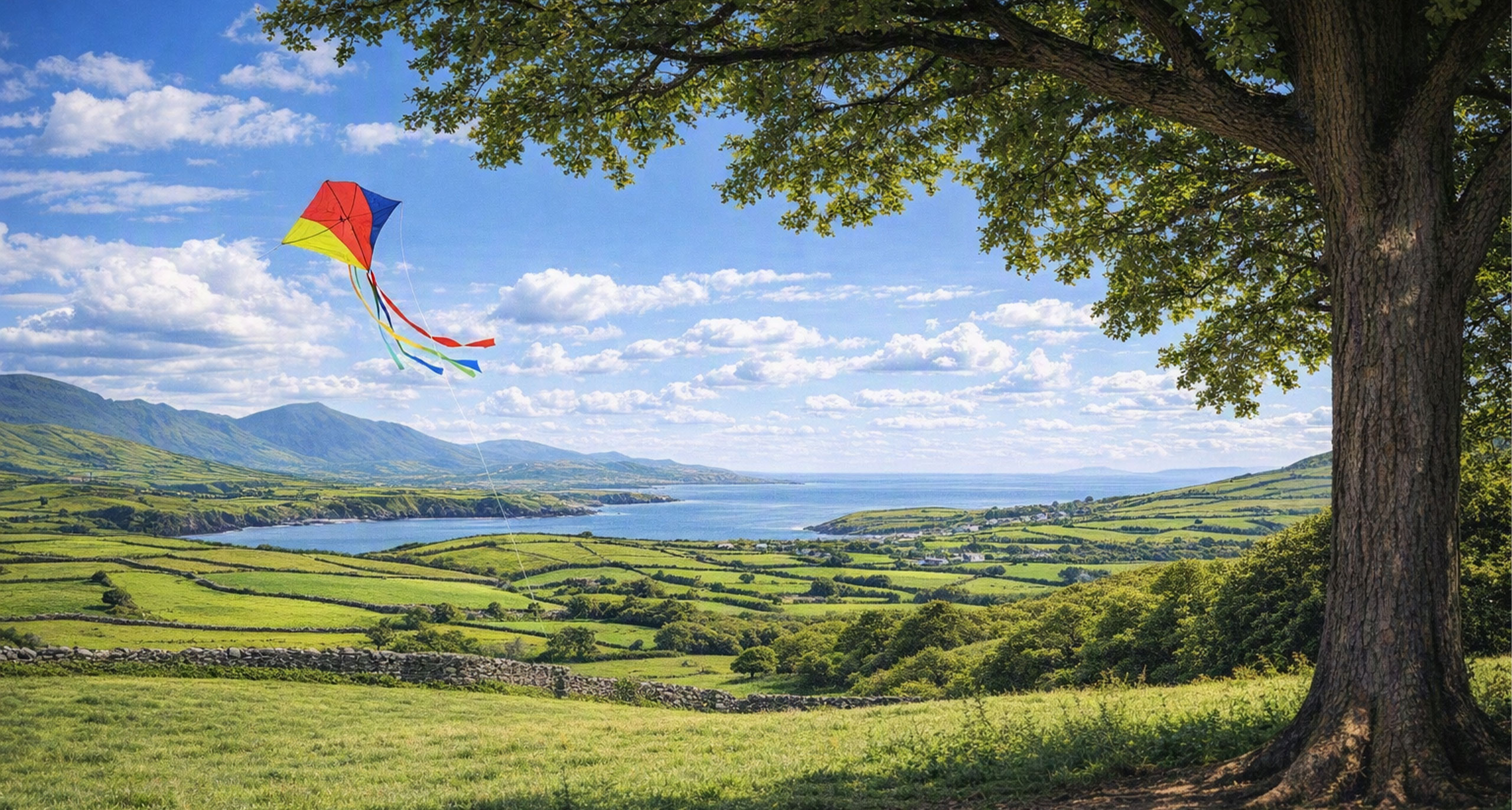
My thanks reader to all those who have written in to comment on these ramblings over the year, always richly entertaining. I hope you have a restful Summer and enjoy adventuring with the children, I’m off to fly a kite in the shade.

Winnie the Pooh is a hundred. I wonder if your experience of him is as a wonder ancient and new. There is a timelessness to the stories and adventures that appeals to generation after generation of children.

Well reader if you are a regular or even an irregular visitor to this page you will by now be familiar with the fact that I might begin at left field with these musings and today you are not to be disappointed.