
HEADMASTER'S BLOG
All my stories
ALSO SEE
Embley is part of United Learning. United Learning comprises: UCST (Registered in England No: 2780748. Charity No. 1016538) and ULT (Registered in England No. 4439859. An Exempt Charity). Companies limited by guarantee. VAT number 834 8515 12. Registered address: United Learning, Worldwide House, Thorpe Wood, Peterborough, PE3 6SB.
HEADMASTER'S BLOG
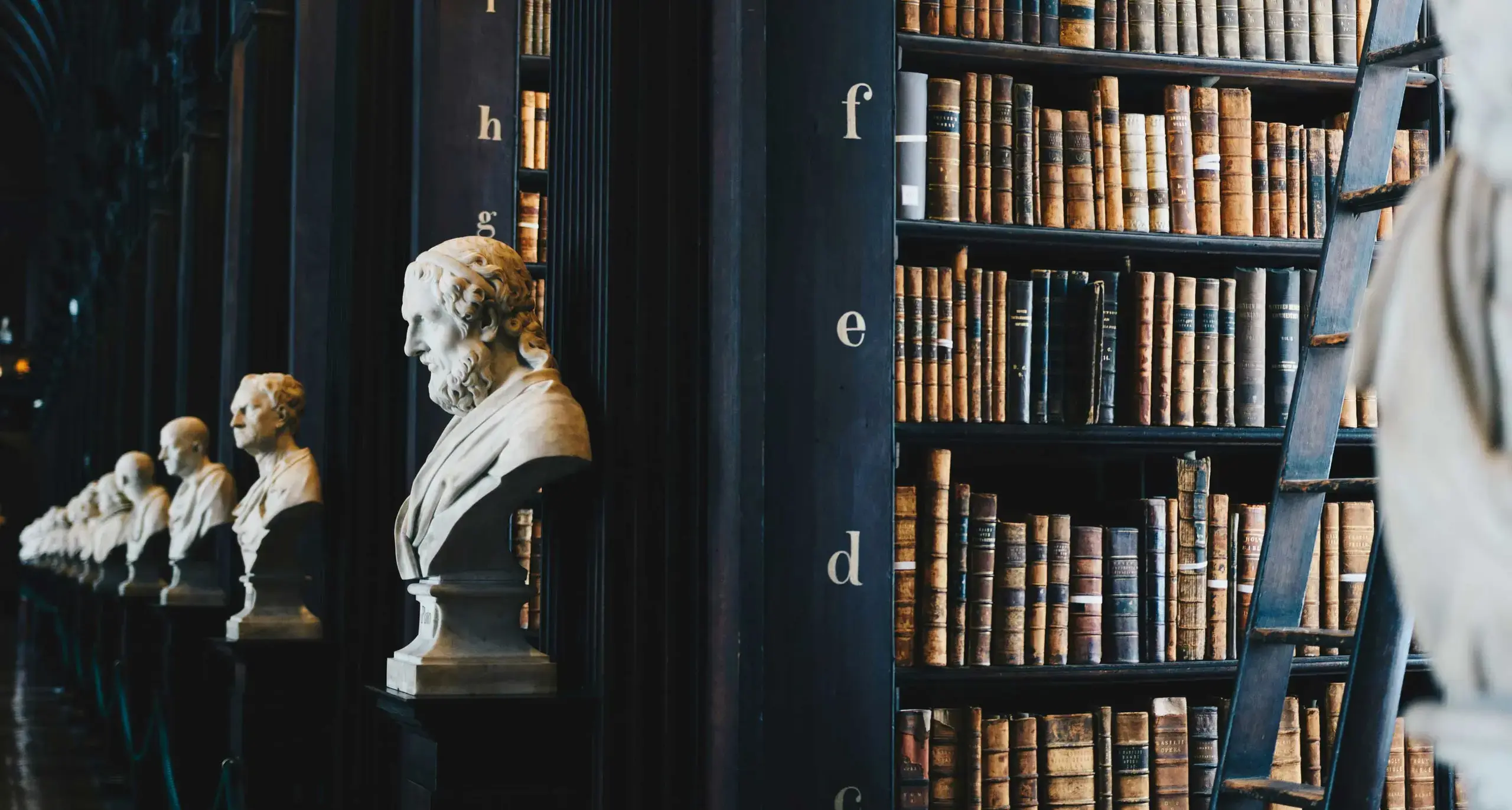
All my stories are true, it’s just that some of them never happened. You may well have heard me say this before; I am on record as having said it routinely during assemblies to the point where there is a gentle but caring groan from the assembled community. To those unfamiliar with it, I wonder what sense you might make of its meaning? How can stories be both true and never have happened? Perhaps the best way to answer that question is with another. What is it about the best book you ever read that holds it so deep in memory?As I write, we are in the midst of recruiting a librarian for our newly refurbished library. It may not rival that of antiquity at Alexandria or the Old Library at Trinity today, but it is ours and a seat of learning. Our students are involved in the recruitment process and one of them asked a candidate what five books they would have as the foundation of the collection. I wonder reader what you might choose? There are so many questions to consider around this enterprise. Do libraries continue to serve a function given the role of resources on the web? Are books the things you hold in your hands and turn pages still worthwhile and why? How do we justify the purchase of physical texts when online editions are so much cheaper and readily available? To the question of which books to choose… I look forward to your submissions!
The answer to some of this (and I am not being deliberately glib) is the same as the reason we continue to teach languages when Google translate will do an OK job. We do it not because it is a transactional exchange of data but because we are human and, to be the most complete version of ourselves, we need to engage with ideas and experiences that are markedly different from, yet intelligible to, our own. If they know not England who only England know then we owe it to ourselves to ‘cast off’, launch our barque onto the deep of human experience, with our end being life we need to put out to sea. When it comes to reading, it is a personal preference, reader, that I enjoy a book, the physical thing with leaves; probably a mix of the sensory experience with what I have become accustomed to over many years. I don’t have any issue with the Kindle users; at least if they borrow a book, they won’t split the spine. OK yes, I am one of those guys who reads with the care a glassblower takes to crystal (again a personal foible). But to the matter in hand, why read at all?
The reason is the better to explore the nature of what we are and in so doing to explore the context that conditions our consciousness. There is also an inherent beauty in the use of words to create pictures in our minds. My old teacher told me he enjoyed the radio more than telly for this very reason, the pictures are better. That we decode symbols into meaning and relate that meaning to our experience enlightens us. It also makes us feel less alone but not less individual. We are joined to an understanding that the experience I have of the world is shared and while I experience it in a way unique to me, it is not exclusive to me.
No one feels joy as I do, but we all feel joy. In a world so increasingly connected but at the same time remote, it humanises our experiences by drawing us closer to each other through understanding. It is why we understand Shylock: if we are pricked we bleed, if poisoned we die? We all feel fear, though few can comprehend the angst of Anne Frank. We recognise the pull of the crowd but not the claustrophobia of Endo’s characters, where heroes suffer in a divine silence, like Mishima, succumb. We experience the spiritual but maybe not as Allende’s magical realism. We share Steinbeck’s simplicity but are frustrated with Gatsby’s craving for it. We spectate and comment from the sidelines with Nick Carraway and cower with Lockwood from Nelly Dean's.
We pour over the metaphysics of Alexandria and are enlightened by the luminosity of Kells. It is why they were and are great libraries and why we are rebuilding ours
It is why we read and why even, if they never happened, all my stories are true.

All my stories are true, it’s just that some of them never happened. You may well have heard me say this before; I am on record as having said it routinely during assemblies to the point where there is a gentle but caring groan from the assembled community.

Our community gathered at 9 o’clock on Wednesday to remember. In a space so full of memories, routinely joyous, sometimes raucous, where we celebrate significant school events and enjoy the cacophony that follows House competitions.