HEADMASTER'S BLOG
Liberators
ALSO SEE
Embley is part of United Learning. United Learning comprises: UCST (Registered in England No: 2780748. Charity No. 1016538) and ULT (Registered in England No. 4439859. An Exempt Charity). Companies limited by guarantee. VAT number 834 8515 12. Registered address: United Learning, Worldwide House, Thorpe Wood, Peterborough, PE3 6SB.
HEADMASTER'S BLOG
Well reader if you are a regular visitor to this page, you will by now be familiar with the fact that I might begin at left field with these musings and today you will not be disappointed. No doubt you are familiar with the third essay in Nietzsche’s collection of musings entitled 'Untimely Meditations', published in 1874 and titled 'Schopenhauer as educator.'A striking piece of contradiction in many ways, you might debate why the musings are 'untimely' or why they focus on a teacher who was so notoriously poor at communicating that few attended his lectures ending with him sloping off to think for himself about how horrible the world was. Nice work if you can get it, nursing a fit of pique by independent means, hardly troubled by worrying about how the bills are paid. Nietzsche would later, in 'Ecce Homo', admit that the essay was not at all about Schopenhauer but more about himself, but I digress.
The essay is a critique of materialism, the commercialisation of society and the weakness of education in challenging it. He praises Schopenhauer's apparent indifference to popular adulation. In today's world, these guys would be reluctant influencers on TikTok, but in another contradiction both were very keen to influence. The Nietzschean ideal of an educator is one who liberates students. He has little regard for filling minds full of facts and more interest in what thinking minds do to make sense of the world they are in and ultimately to affirm their 'will to live'. He might be a bit more contemporary in this thinking than you have allowed yourself to believe?
Now we had better row back a tad on the 19th Century and give them a more reasoned hearing. Facts are important, cramming facts into young minds at the expense of developing the quality of their thinking is not so helpful because they do need to know what to do with those facts. It is impossible to discern Truth if there are no examples of, or competing claims to Truth. What has all of this to do with us today?
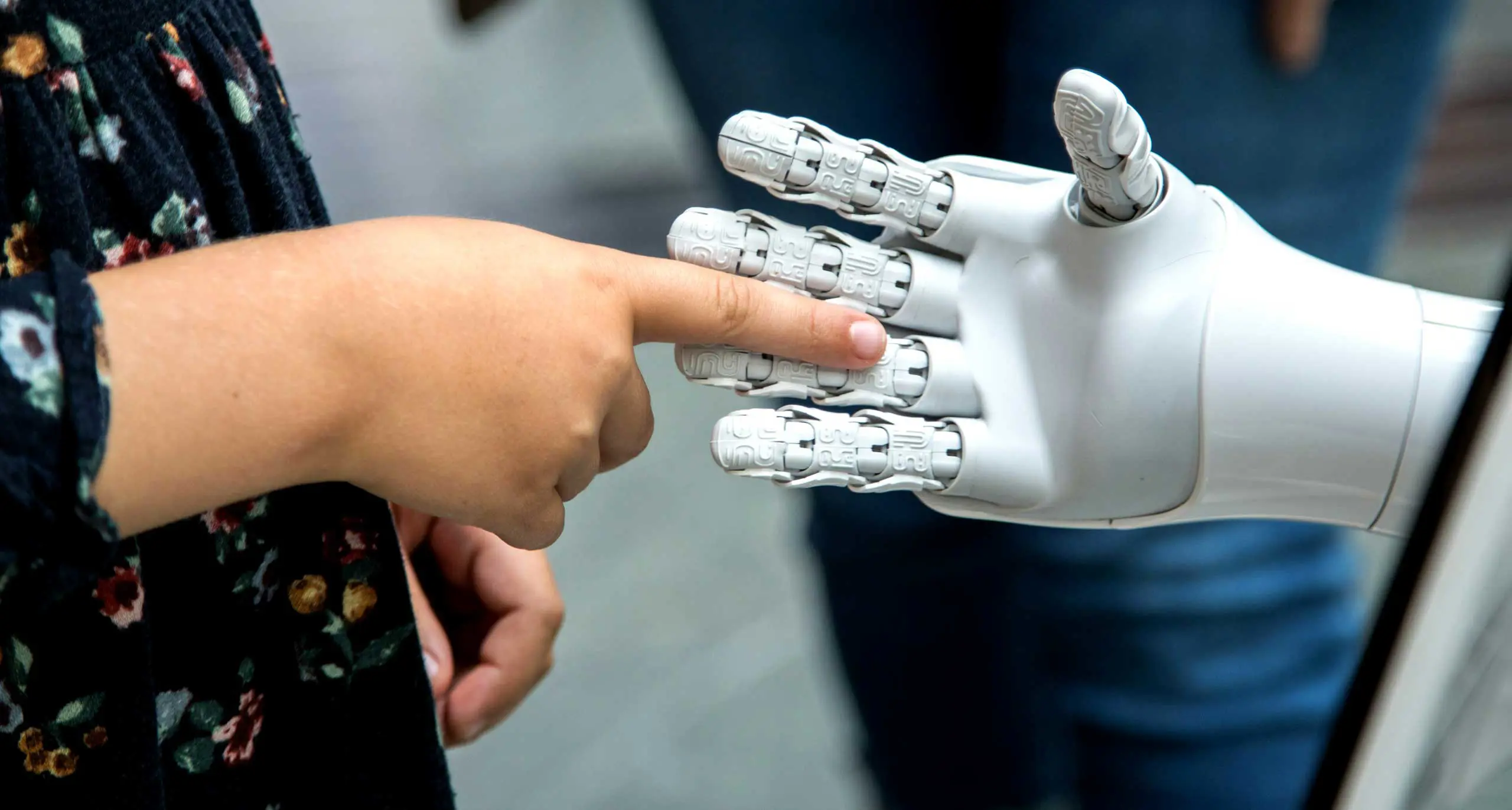
I was really interested recently to listen to a discussion at HMC (an association of independent schools worldwide) about the future of education with the ghost or spectre AI looming, and the widespread circling of notions - some fanciful, some fearful, some focused - on what the future of work will look like. I am personally challenged to think about what the weekend will look like and on occasion what is happening after lunch, but to be serious for a moment, the question of AI and how we navigate the future is deeply concerning. I will not attempt here to go into a discussion on whether guard rails are necessary or not. Suffice to say that the history of humankind suggests that we ought to be very circumspect with getting carried away with tech when the unintended consequences might be irreparable. The centrality of the dignity of the person must be always at the core of any and all thinking in this area.
The debate heard a refreshing view, that students need to be equipped with capacities for reasoned analysis; the capacity to communicate clearly and effectively; to analyse data the better to identify patterns and make decisions. Predicting the future is tricky and possibly futile. I remember the rush to have everyone learn coding, it was the future of education and children would be let down if they couldn’t code. The most successful applications of AI are in writing code, where does that leave us? There is no point in so called 'future proofing', it suggests we know what the future will bring and that we have a strategy to mitigate it. There is also a real risk of cross contamination of fears. The concerns we have about children’s use of screen time, use of AI, exposure to social media are three separate concerns not one. I have said much about the need to balance tech with need; to preserve childhood against attempts to foreshorten it and what I consider the inauthenticity of social media. But AI has massive possibilities in supporting learning, in analysing performance and extending thinking.
The arrival of the calculator didn’t herald the end of student computation, it facilitated learning and we adjust for it in teaching. So too with AI and the generative tech that will be increasingly present. But there is much to be optimistic about. AI is not the harbinger of doom nor the destroyer of worlds necessarily. Ours is a world where we continue to teach children to think, to communicate effectively and represent a point of view with reason and kindness. There is more we can do the better to understand each other that goes beyond tech; to deepen cultural awareness, to appreciate and cherish difference. We will continue to teach literacy because it is foundational to being human, to develop thinking because it makes us more our authentic selves. In this, my 19th Century friends are more contemporary in our time than they were given credit for in theirs; our engagement with education for its own sake makes us liberators.

Winnie the Pooh is a hundred. I wonder if your experience of him is as a wonder ancient and new. There is a timelessness to the stories and adventures that appeals to generation after generation of children.

Well reader if you are a regular or even an irregular visitor to this page you will by now be familiar with the fact that I might begin at left field with these musings and today you are not to be disappointed.